Ready for a site survey?
WHY USE MACHINE LAID TARMAC
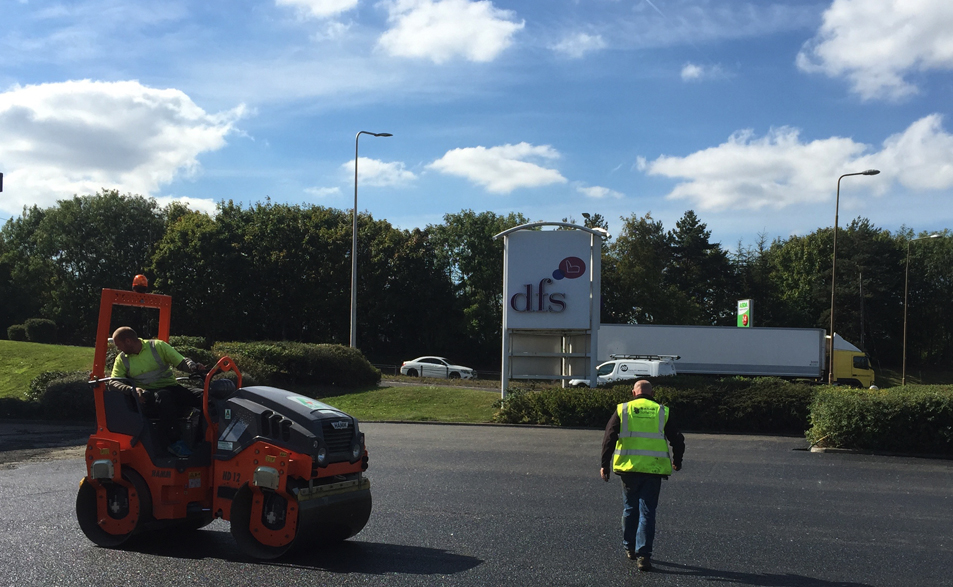
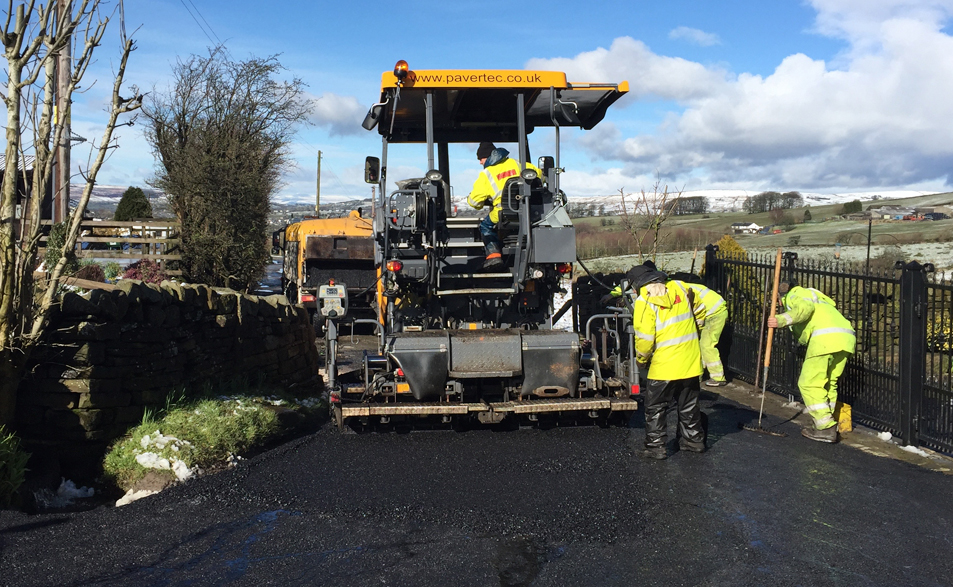
Asphalt machine pavers distribute larger quantities of asphalt across larger areas where space is accessible, such as EV charging hubs, car parks, forecourts and access routes.
Machine pavers perform better when the sub surface or foundation is level, creating a precise level surface finish with depths and falls being consistent throughout. A machine paver will lay asphalt up to widths of 4 metres and travel along lengths as required.
A driver and screed operators are required to operate the machinery, with labourers and groundworkers needed to fill in sections not accessible for the paver, such as around bollards, kerb lines and charging bays.
Types of Asphalt Used For Surfacing
There are three main types of surfacing products AC 6, AC 10 and AC 14, these products are generally used as standard specification requirements. For heavier use and when specified, products such as SMA (Stone, Mastic, Asphalt) or Hot roll are used.
- AC 6 – Wearing course for footpaths and lightly trafficked areas such as driveways and courtyards.
- AC 10 – Surface layer rural roads, car parks and driveways, which are considered lower stressed areas.
- AC 14 – Mainly used for the heavier trafficked areas such as busy main roads and motorways.
- AC 20 – The Binder course is placed between the surface and base layer to help bind and create a solid foundation.
- AC 32 – Base course used to provide a solid foundation for your binder and surface courses to be laid on.
- SMA and Hot Roll Products – Used in higher stressed areas such as car parks or on road bends – generally in areas where turning is apparent.