Building on a Live Site: How EV Civils Work Around an Operation That Cannot Stop
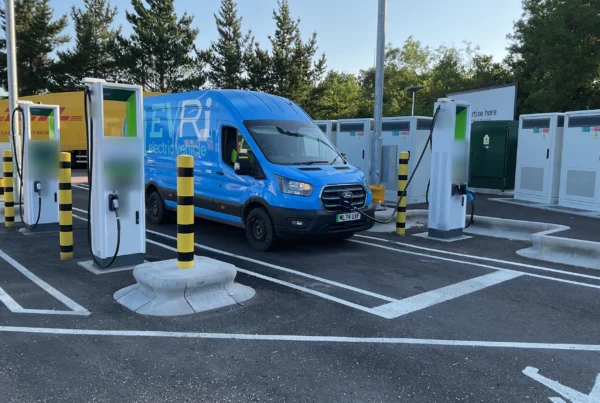
Most EV charging projects are not built on empty ground. They are built on forecourts that trade around the clock, car parks that customers are still using, and depots that vehicles move through all day.
The client’s real question is rarely how long the groundworks take. It is how much of their operation they lose while it happens.
The constraint is the operation, not the work
On a clear site the programme is set by the work itself. Dig, drain, duct, base, surface. On a live site it is set by what the operator can afford to close, and for how long.
That changes the order things happen in. Work gets broken into sections so part of the site keeps running while another part is closed. Access routes have to stay open. Deliveries land when the site is quiet rather than when it suits the crew. The dig that would take three days in one go takes longer split into three.
It is slower on paper. It is also the only version the operator will agree to.
Phasing is a plan, not an intention
Saying works will be phased is easy. Doing it means deciding in advance exactly which bays close in which week, where the barriers go, how vehicles get in and out, and what happens at each changeover.
The changeovers are where phased jobs go wrong. Reopening one section and closing the next means reinstating to a usable standard, moving fencing and traffic management, and getting plant repositioned without crossing a live area. Each of those takes time that does not appear anywhere on a bar chart.
Plan the changeovers properly and a phased job runs. Treat them as gaps between phases and the programme drifts.
Pedestrians make it harder than traffic
Vehicle movements are relatively easy to manage. People are not.
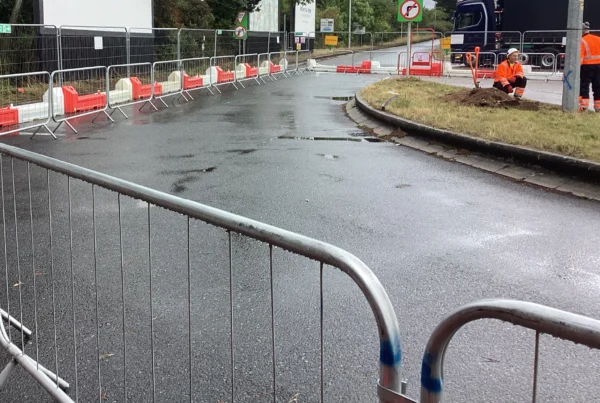
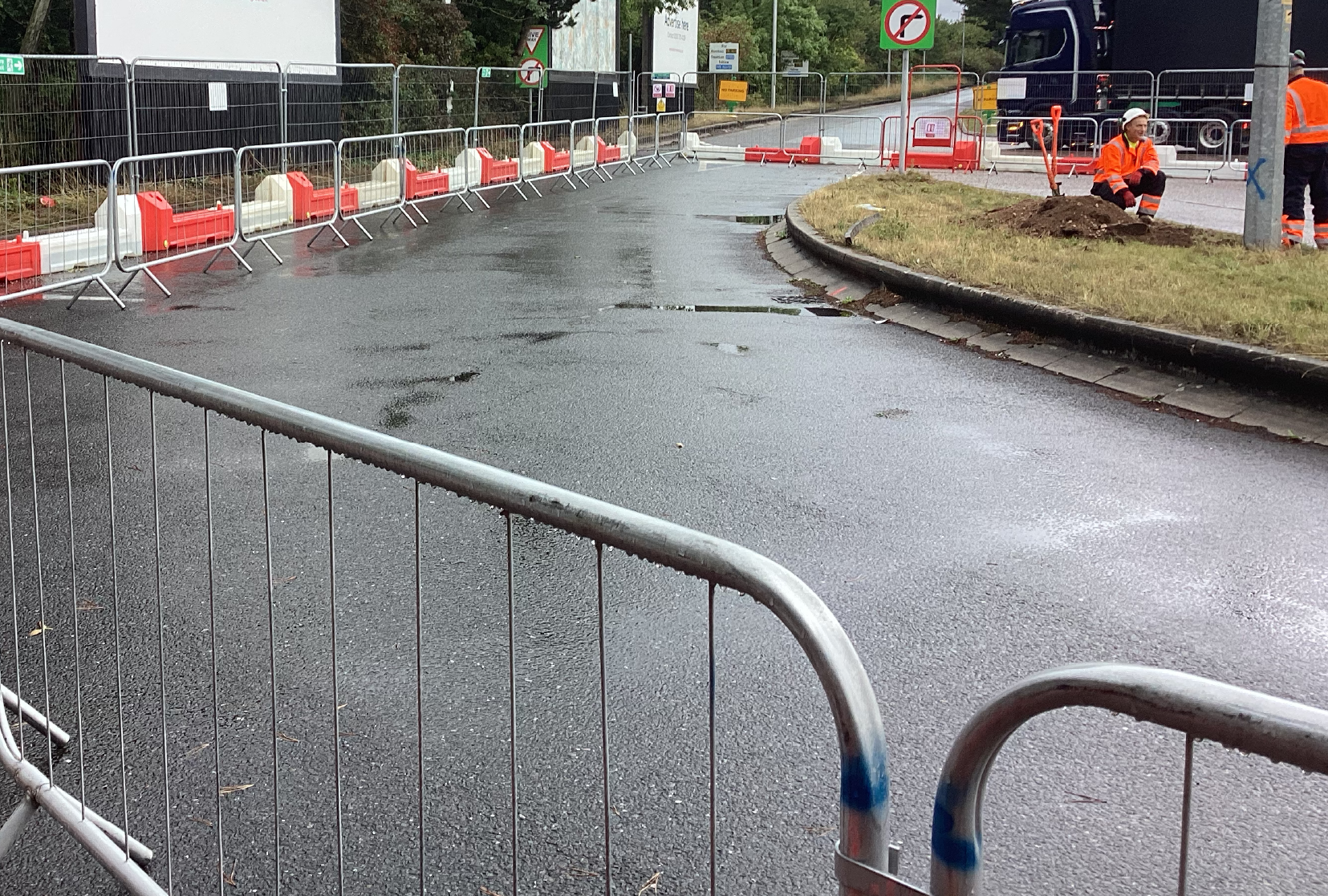
On a trading forecourt or a retail car park, members of the public walk across the site continuously, and they will take the shortest route regardless of what the signage says. Segregation has to be physical rather than advisory, walkways have to go where people actually want to walk, and edges, excavations and level differences have to be safe for someone who is not paying attention.
This is also where the site gets judged. A tidy, clearly segregated compound reassures the operator. A sprawling one generates complaints before any work has gone wrong.
What is underground is worse than the drawing says
Live sites have decades of history under them. Services have been added, diverted and abandoned, and record drawings rarely reflect reality.
That is why CAT scanning and trial holes come first, and why hand digging around anything uncertain is standard practice rather than caution. On a trading site the consequence of striking a service is not a delay to the groundworks. It is the operator losing power, water or fuel, and that conversation is a different one entirely.
Noise, dust and hours
Working next to a live operation puts limits on method. Breaking out at seven in the morning next to a hotel or a residential boundary is a complaint waiting to happen, and some sites carry conditions restricting when noisy work can take place at all.
That has to be built into the programme rather than discovered in week two. It also affects plant choice, and it is one of the practical reasons quieter machinery is becoming more useful on this kind of site.
The site has to look finished every night
On a closed site you can leave the works open and pick up in the morning. On a live one you cannot.
Excavations need covering or fencing, plates need to be safe to drive over, surfaces need to be trafficable, and the area handed back each evening has to be genuinely safe for the public. That daily making-good is real work and it needs allowing for, because the alternative is a crew rushing it at half four.
Communication is part of the job
The projects that go well on live sites share one habit, and it is not technical. Someone talks to the site manager every day.
What is closing tomorrow, what is arriving, what is noisy, what changes on Friday. Operators do not mind disruption they know about. They mind surprises, and almost every complaint on a live site traces back to something nobody told them.
Why it matters commercially
For a charge point operator or a landlord, the cost of a project is not only what the contractor charges. It is the trading days lost, the customers who could not park, and the complaints that come with it.
A contractor who plans phasing properly is not just being tidy. They are protecting revenue the client would otherwise have written off. On a live site, that is usually worth more than the difference between two prices.
Recent Posts