What Makes an EV Charging Site Buildable
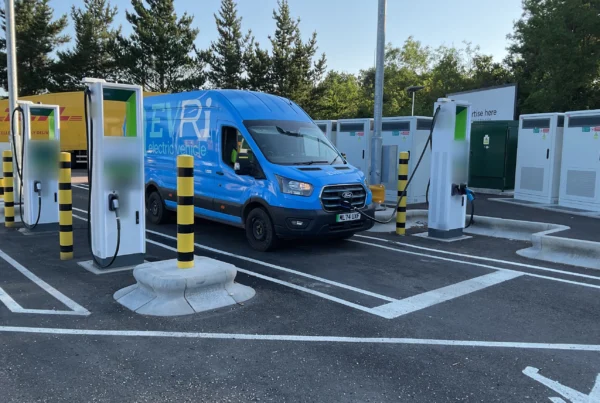
Most EV charging sites are chosen for good commercial reasons. Traffic counts, dwell time, proximity to a trunk road, an existing forecourt with space at one end. All sensible.
What makes the programme run smoothly is usually something else entirely. It is what sits under the surface, and the projects that go well are the ones where it gets looked at first.
Buildable and available, working together
A site can be commercially strong and straightforward to build, and the two line up neatly when the groundwork is understood early. It comes down to five things: ground conditions, drainage, existing services, access, and what you hand back at the end.
None of them are exotic. They are simply easier to plan around when they are known from the start, and that is exactly where good civils input pays off.
Ground conditions and what is already in the ground
A significant share of EV charging sites sit on brownfield land. Former petrol stations, commercial yards, older car parks and industrial sites all make excellent charging locations, because they are already served by roads and already hard surfaced.
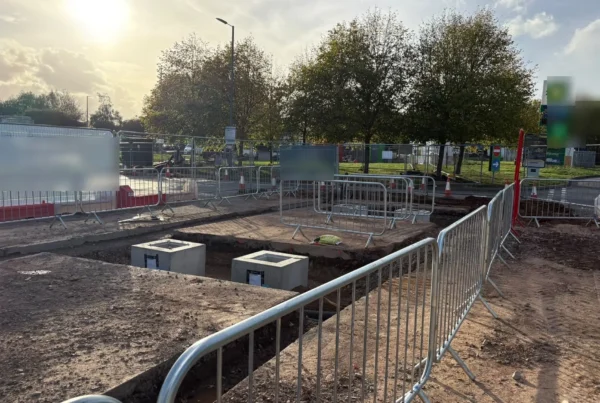
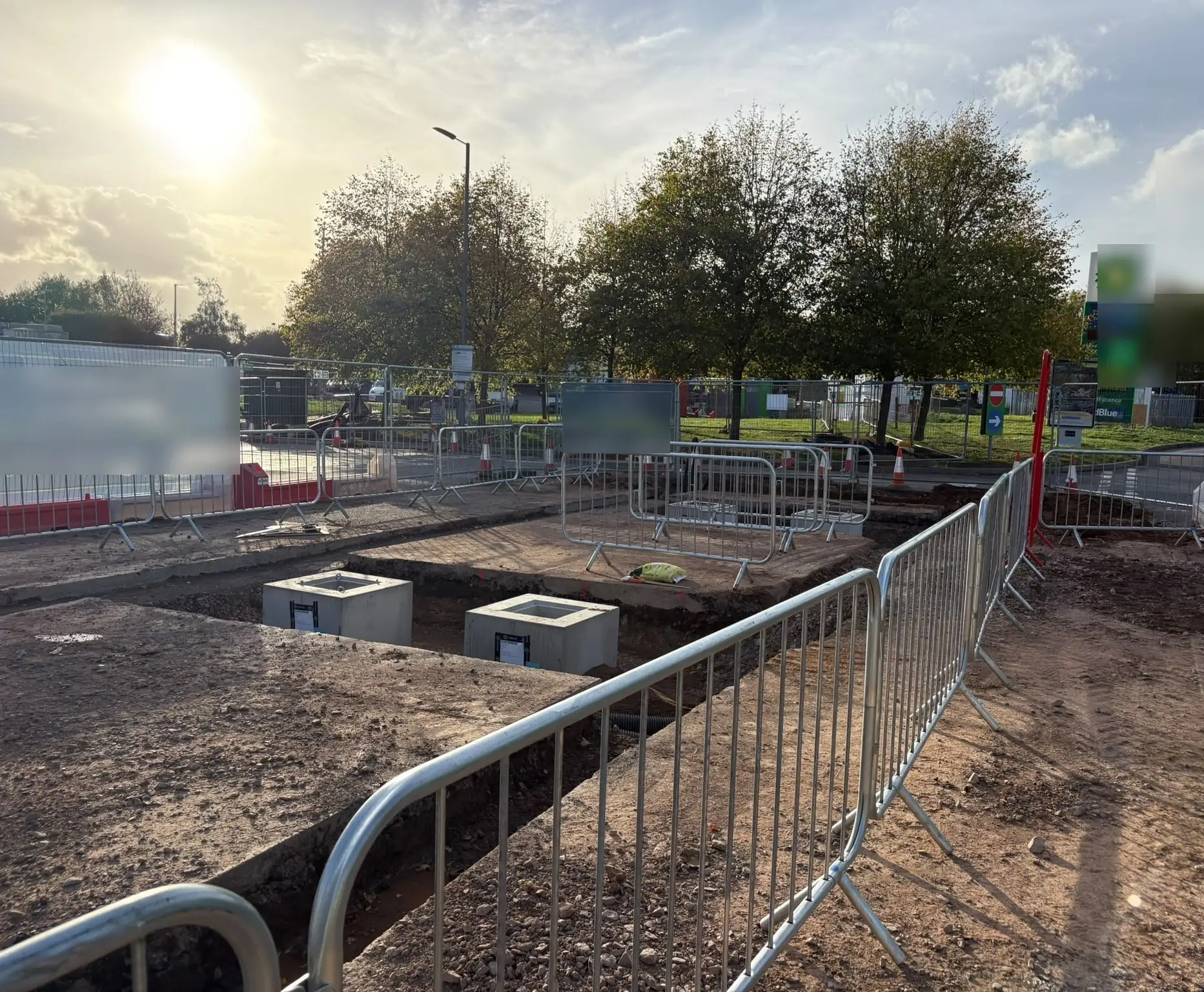
They also come with a history worth understanding. Ground conditions on sites like these shape excavation, foundations, ducting and how material is handled once it comes out of the ground. A desk study early on gives a clear picture of what to expect, so the dig is planned with confidence rather than surprise. It is a small step that sets the whole programme up well.
Drainage, planned across the whole site
Charging bays need falls. Water runs away from the units rather than pooling around them, and on a hub with several bays that is designed across the whole area rather than bay by bay.
Many good sites, retail parks, roadside stops and transport hubs, already have a drainage strategy in place. Reading that early means the new layout works with it, whether that calls for raised plinths, additional channels or a deeper run. Drainage goes in while the ground is open, so planning the sequence up front is what keeps the build moving cleanly from one stage to the next.
What is already underground
Live forecourts and operating car parks have decades of history beneath them, with services added and adapted over the years. Building an accurate picture of what is down there is simply part of doing the job properly.
That is why survey and CAT scanning come first, and why hand digging around anything sensitive is standard practice. On a site that is still trading, that care keeps the
operator running and the works flowing alongside them, which is exactly what a good handover depends on.
Access and working space
A charging hub needs plant, deliveries and a place to put excavated material. On a tight urban site, or one that keeps operating throughout, the working area is planned as carefully as the build itself.
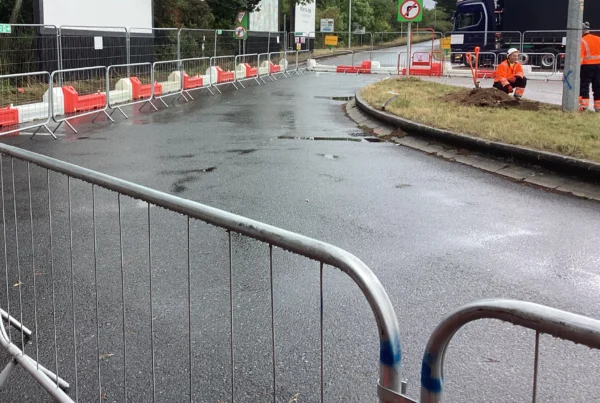
This is where phasing earns its keep. Splitting the site so that part stays open while another is worked keeps the operator trading and the programme predictable. It takes planning up front, and it is what makes a busy site feel calm and controlled on the ground.
What you hand back
Reinstatement is where the finish is made, and planning for it early is what makes the handover clean. Work in the public highway has its own standards and permits. A retail landlord may want the surface tied neatly into an existing finish. A forecourt operator wants the site looking complete on the day they reopen.
Kerbing, surfacing and line marking all come at the end of the programme, so setting the expectation for “finished” at the start means the final stage lands smoothly, on time and ready to use.
The early survey is the best value
Every one of these is straightforward when it is understood in week one, and a well-run site is simply one where that homework was done early.
The projects that run best start with a site selected on solid commercial logic and civils scoped from a visit as well as a drawing. The drawing gives you the plan. The visit fills in the detail that makes the plan hold.
If you are assessing a site, five simple questions set you up well. What was here before? Where does the water go? What is already under the surface? How do we get plant in? And what does finished look like to whoever owns it?
Answer those five early, and the programme runs the way it should.
Recent Posts