What Goes in the Ground Before the Charger Arrives
When an EV charging site opens, the chargers are what everyone sees. What they don’t see is the civils work underneath: the digging, the drainage, the ducting and the concrete that every charger sits on.
That work starts weeks before a charger is delivered, and it decides how well the site performs for years after. Here’s what Blackoak puts in the ground on an EV site, in the order we do it.
1. EV Excavations
Every EV site starts with breaking out. Our teams cut and lift the existing surface along the planned routes and base positions, then dig down to the depths the design calls for.
Most of our sites are car parks, forecourts and retail sites that stay open while we work. So we excavate in planned sections, keep spoil off live areas and move it off site as we go. Bays come back into use as soon as each section is safe.
2. EV Drainage
Once the ground is open, we deal with water. Bases, pits and new surfaces all need somewhere for run-off to go, so we lay drainage to suit the site’s existing falls and connect it into the system already there.
Getting this right early keeps bases and draw pits dry. It also means the finished bays drain the way they did before the works, or better.
3. EV Ducting & Bases
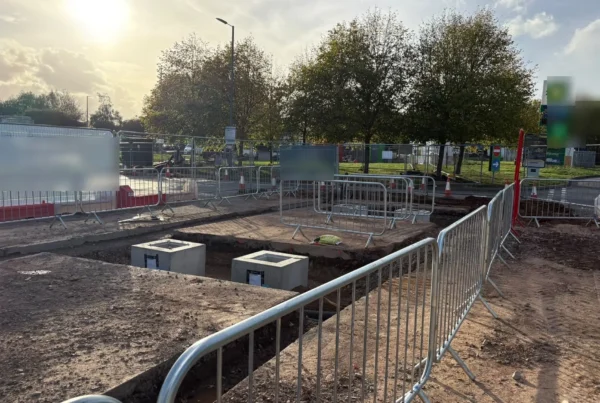
This is the stage the rest of the site is built around. We lay the ducting along the planned routes, with draw pits where they’re specified, so everything that follows has a clear path through the ground.
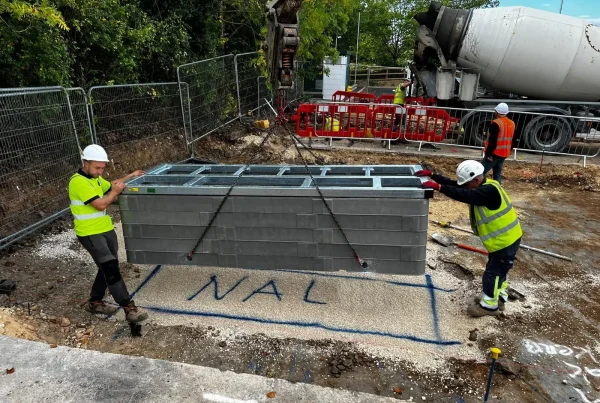
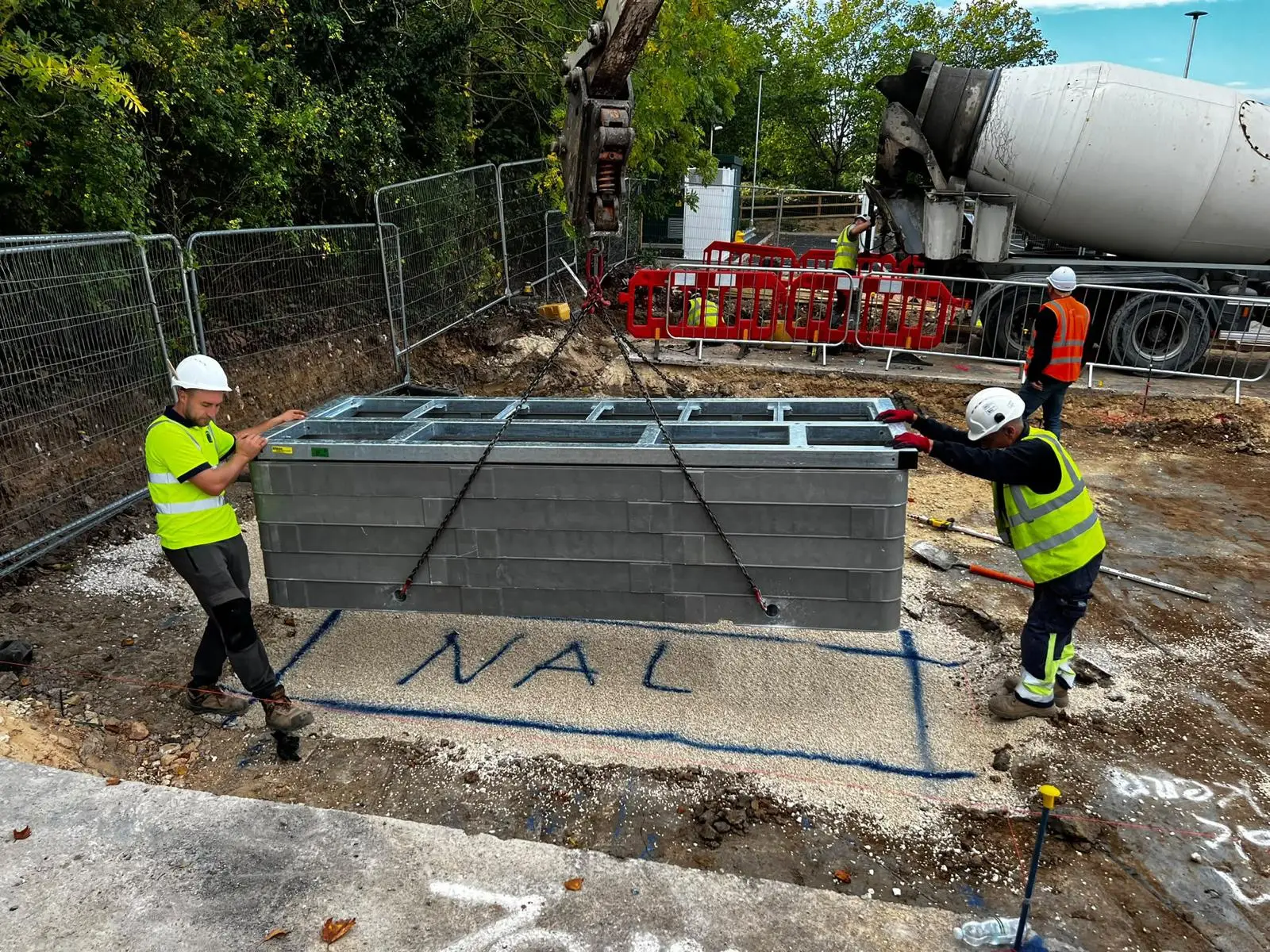
Then come the bases. Blackoak builds the formwork for in-situ concrete pours for LV pillars, SCADA boxes, cabinet bases, canopy bases and other EV concrete structures. Each one is built around the specified ducting, then planned, levelled and finished to the tolerances the site and equipment demand.
4. EV Re-instatement
With the ducting and bases in, we close the ground back up. Trenches are backfilled and compacted in layers, the sub-base goes back in, and the surface is laid to match what was there, whether that’s tarmac, block paving or concrete.
The aim is a surface that sits flush with the rest of the car park and carries traffic from day one.
5. EV Finishing
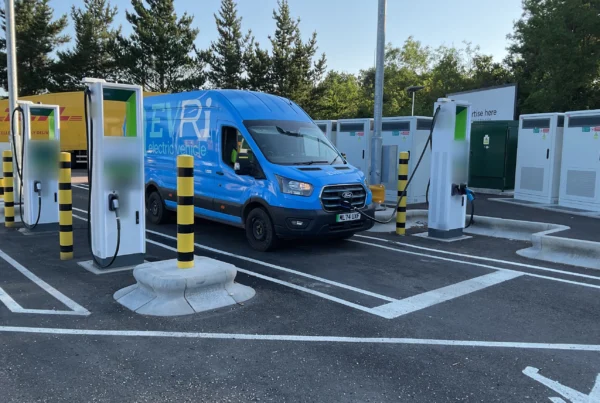
Finishing is what drivers notice. We set kerbs and edging, line the EV bays and leave the site clean and tidy for handover.
Done well, the only thing that looks new is the chargers themselves.
6. EV Health & Safety
Health and safety isn’t a stage at the end; it runs through every step above. That means segregating the work area from the public, managing plant movements around customers and staff, and keeping the site safe to use at the end of every shift.
Blackoak is a Constructionline Gold Member and holds Avetta and SSIP accreditation.
One contractor, full civils scope
Each of these stages depends on the one before it. When one team carries the work from the first cut to the final line marking, nothing gets lost between trades and the programme stays in one set of hands.
That’s how Blackoak works on every EV site: one contractor, full civils scope, EV projects delivered end to end.
Recent Posts