Category

Industry News

How are Potholes formed?

By Industry News

Potholes

Potholes, as I am sure we are all aware, are holes in the roadway that vary in size and shape and . They are caused by the expansion and contraction of ground water, after the water has entered into the ground under the pavement. When water freezes due to cold weather conditions it creates ice, which takes up more space under the pavement. When water freezes it expands and this causes the pavement to bend, and crack, which weakens the surface. Then when the ice melts, the pavement contracts and leaves gaps or voids in the surface under the pavement. The holes get bigger as vehicles drive over them, damaging the structure of the road below its surface layer

Studies undertaken by independent surveyors have shown that almost a third of all damage to cars on the road every year are due to potholes causing damage to cars and in some incidences leading to road accidents. The damage to cars caused by potholes can include the following:

  • Buckled wheels
  • Cracks
  • Lumps in the tyre
  • Cracked alloys
  • Damaged tracking
  • Wheel Imbalance
  • Damaged breaks
  • Suspension damage

Potholes are a very serious issue and can be both a danger and an annoyance to drivers, often causing damage to the car and in the worst case lives.

What can be done about these potholes?

The short-term way to limit the damage caused by potholes are, as a driver, to follow these rules:

  • To be alert – always staying alert when driving is key so that potholes can be spotted and the driver can act accordingly
  • To drive at an appropriate speed – potholes do more damage to vehicles when travelling at higher speeds, so keep the speed down and keep the risk down!
  • Check your vehicle – after work or travel, occasionally check your vehicle for damage that may have been sustained by potholes. It can never hurt to check for damage because it is better to know now, than when it’s too late or further damage can be sustained.

Right? But what if I want a more permanent solution

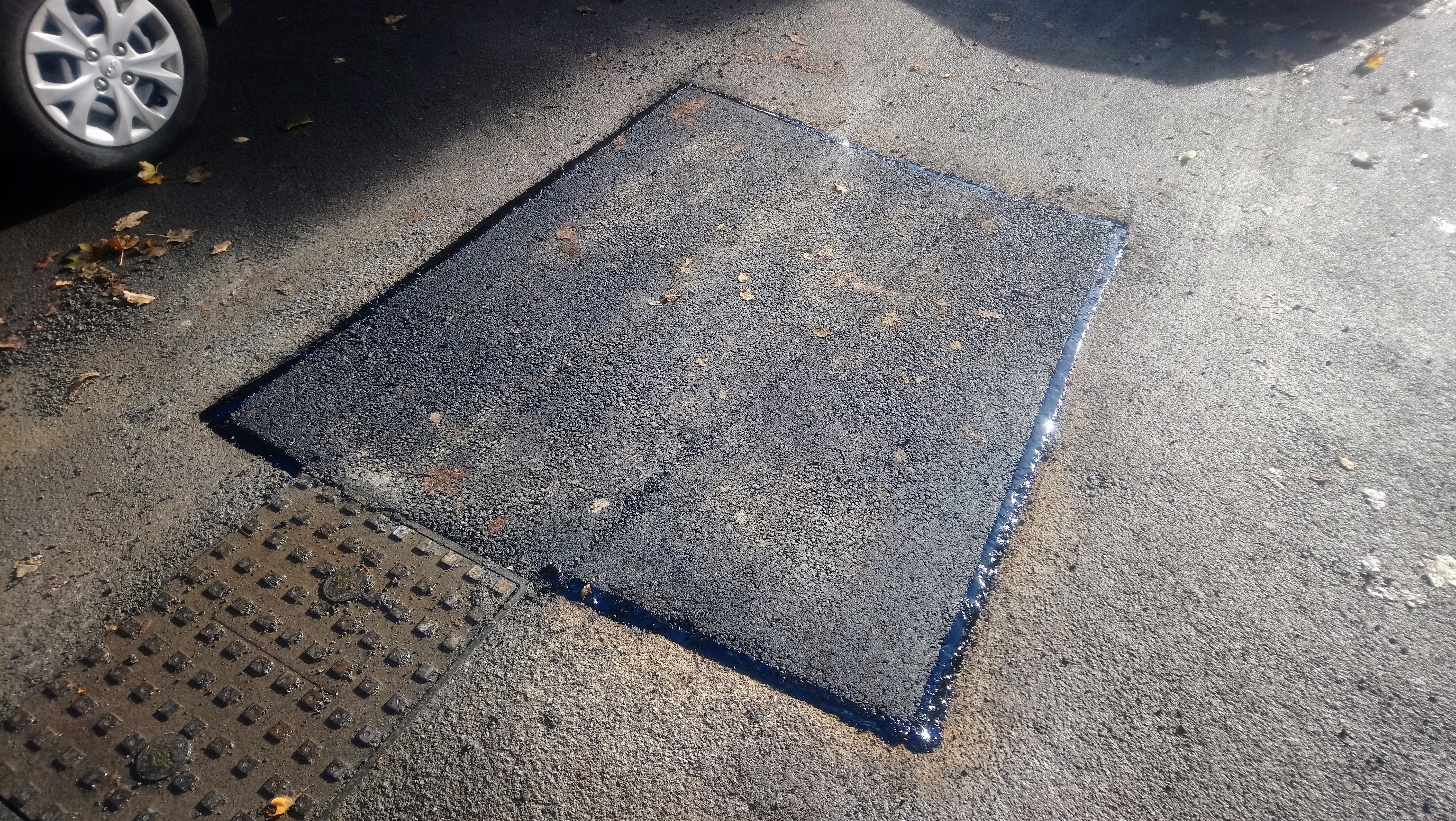
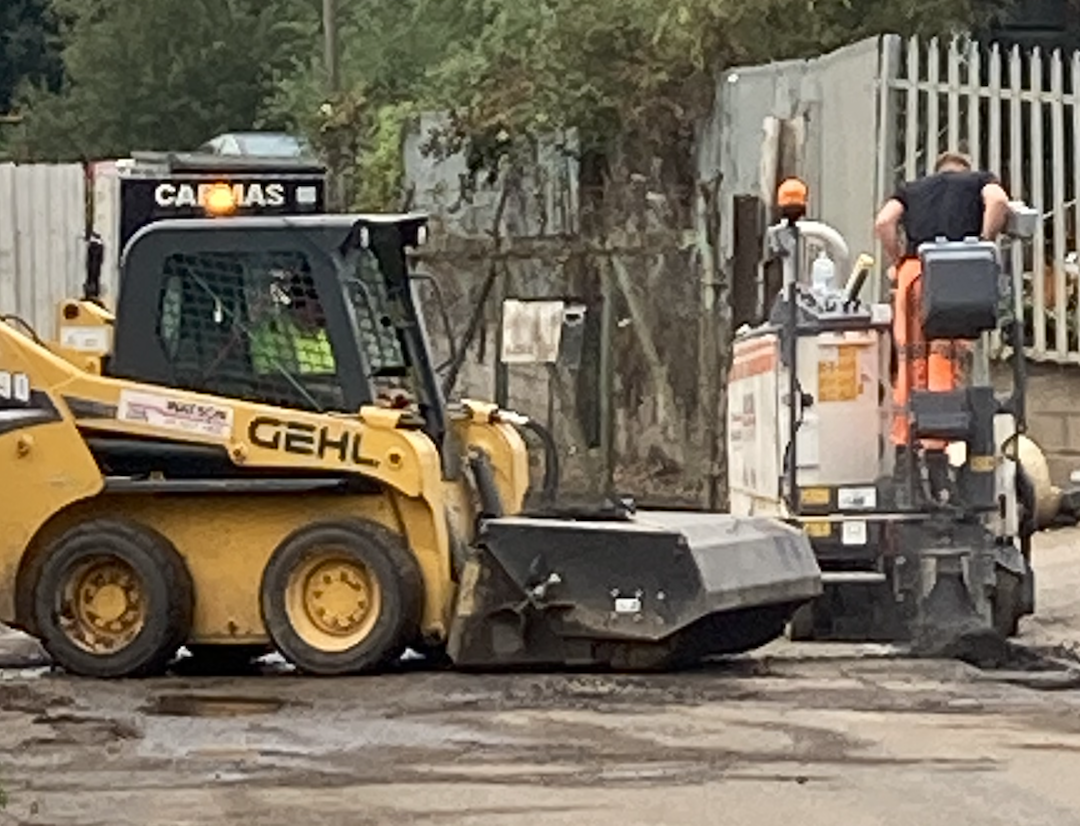
This can done, one or two ways – by refilling the pothole with tarmac so that the hole is covered and there’s no pothole to cause damage anymore. This is a relatively cheap service to do on any driveway or road. The pothole can be filled either manually or machine filled by anyone on our team. However, this is a short-term solution with the pothole likely to reappear again due to the already weakened structure of the driveway or road.

The second solution is to re tarmac the road or driveway as if a pothole is created it’s due to the driveway or road being weakened and worn by supporting the weight of vehicles and damage due to weathering causing the surface to be not as strong as when it was put down. Although this is a costlier choice to do, it is a long-term solution to stopping more potholes occurring in the future, meaning it is more than likely going to save a customer more in the long term.

designing-car-park-blackoak-surfacing

How to Increase Car Park Efficiency & Save Space

By Industry News

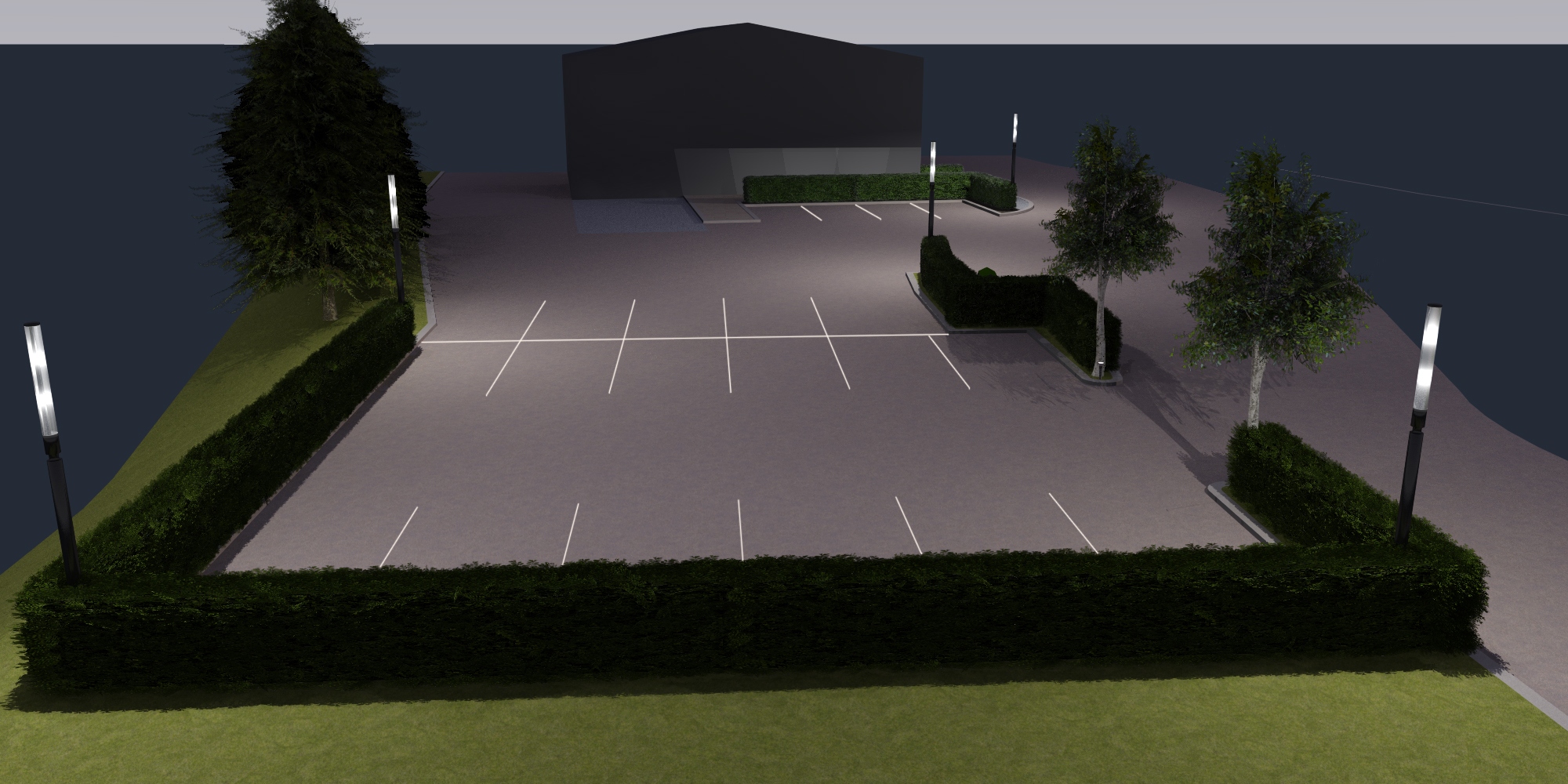
As space becomes more and more a precious commodity we must ask ourselves how we can utilise the effectiveness and space we must work with. This applies to the construction of car parks where new and innovative techniques must be used to maximise the effectiveness for a car park whilst only being in a small space. Here are some ways to maximise the efficiency of a large concrete or tarmac car park in our modern times.

1) Diagonal Car Parking

Now you may be surprised by this thinking that the ordinary straight style of car parking spaces is the most effective method to maximise space however, this is false it is the diagonal option. The maths behind it states that a diagonal configuration no matter what situation will always be more especially aware and fit more vehicle spaces in a car park than the rectangular configuration. This reasoning has lead.

2) Have Defined Car Park Exits and Entrances

We all have experienced the que to get in a car park that only has a one way exit and entrance system and we have all experienced the frustration this has caused. Well obviously, this method is not an effective method of organising a carpark because the more congestion in the car park means less cars being able to park and leave. This can be Solved by embedding clear exits and entrances at opposite ends of the car park so a clash between exiting vehicles and entering vehicles cannot occur.

3) One-Way Aisles

Now this may seem inefficient and a recipe for disaster however, with the combined use of defined entrances and exits this can be a very effective method of traffic control in the carpark. This method ensures that oncoming traffic cannot occur therefore eliminating all aspects of reversing backwards to allow right of way.

4) The Interlock Method

If your car park is on the bigger size and takes advantage of the grid car parking method then you should certainly be thinking about revaluate this method to the interlock method. This method includes using the diagonal method one after each other to maximise the number of car parking space to create an efficient space that is easy to use and allows easy flow of vehicle movement.

Keep an eye out for more of our surfacing and civil engineering tips and advice.

Grounds Maintenance at Premier Inn

Grounds Maintenance Contracts Now Avaialble

By Industry News

As we are expanding we are adding more skills and services to our portfolio and skillset in order to facilitate all aspects of Civil Engineering to our customers to a high standard.

We have been asked many times if we could provide Ground Maintenance in the past and we have unfortunately had to reply in the negative as with the speed and intensity we have been growing we literally didn’t have time to take this aspect of the job on and be 100% confident we were completing it to the best of our abilities.

But times change and now we are extremely happy to say, “yes we can”.

Blackoak can now provide you with Ground Maintenance for any site or complex to an extremely high standard. Whether it be faded line markings, a broken kerb, deteriorating surfaces with potholes or just general wear and tear issues, we are the company for the job.

We are even looking at providing month to month and yearly retainer packages so you know any minor inconveniences with your workplace, car ark or any other property will be dealt with promptly and with minimum disruption.

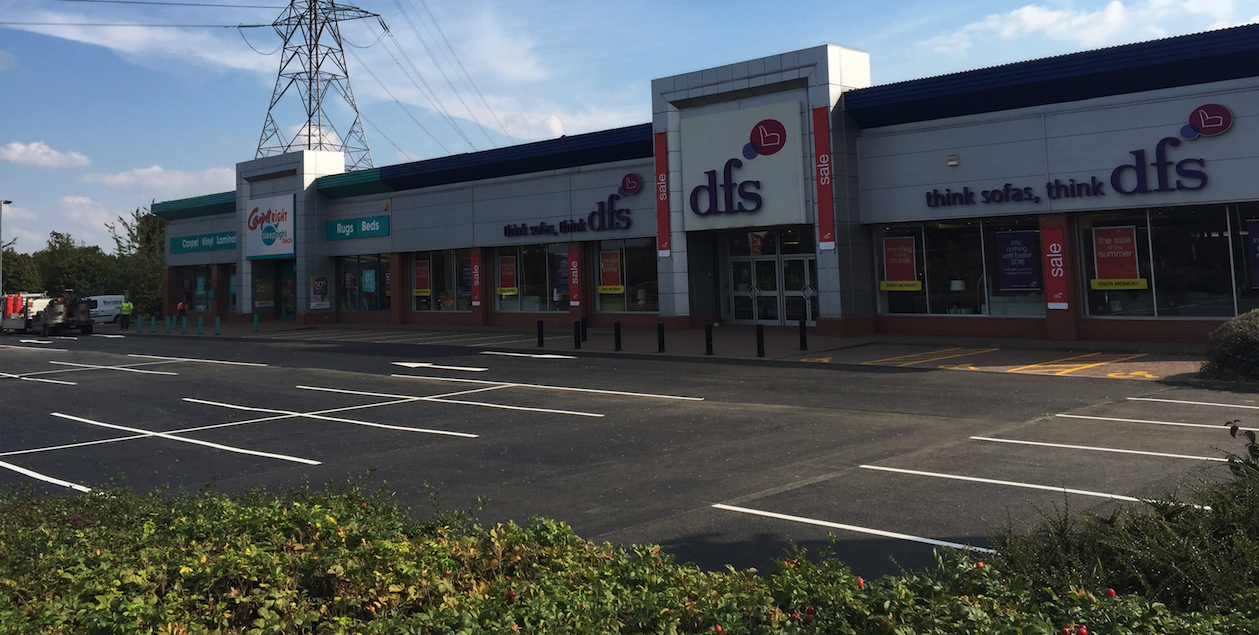
I’m sure you already know the quality of the work but it doesn’t hurt to solidify those opinions, so here are a few of our recent projects for you to look through.

DFS Car Park Resurface

Thameside Hospital Repairs

All lovingly completed by the Blackoak team 🙂

If this sounds like something that would benefit yourselves then don’t delay, give us a call today…. On 01282 546517

asphalt-uses-road-car-parks-blackoak-surfacing

All About Asphalt a mixture of aggregates and filler

By Industry News

What is asphalt?

Asphalt is a mixture of aggregates, binder and filler. Aggregates used in mixtures can be crushed rock, sand, gravel or slags. In order to bind the aggregates into a cohesive and easy to mix substance a binder is used. This is most commonly bitumen as its chemical properties make it effective at locking and holding the mixture together.

What is it used for?
Asphalt has many uses, which it is why it is such a common and widely used product. As a material, it is a highly versatile and long lasting product. Here are some of the ways it can be used:
• Infrastructure (roads, railway beds or airport runways, taxiways)
• Recreation (playgrounds, bicycle paths, running tracks, tennis courts)
• Agriculture (barn floors, greenhouse floors)
• Industrial (ports, landfill caps, worksite)
• Building construction (flooring).

Ways of laying the material

Hand Laid
Using the hand laid method completes the majority of small and awkward jobs. This method is usually chosen when the job does not require complicated means of laying the material and plant is not available. This method comprises the asphalt being brought to the job on the back of a wagon covered by insulated sheets or in an insulated vehicle (hot box) to keep it workable. Then it is generally dropped or shovelled into wheelbarrows and taken to the area required. The skilled contractor will then use his experience to rake it level and ready to compact.

Machine Laid
As a material, Asphalt can be laid in large areas such as highways and car parks using pavers. It is added to the paver via a wagon or other suitable plant into a heated hopper housed in the machine at a temperature around 180°C. It is then distributed onto the surface and spread evenly leaving a smooth surface ready to be rolled and compacted vigorously to ensure stability and durability of the surface. This results in a solid and smooth surface. This process can be used for both binder and wearing courses and is perfect for car park surfacing or resurfacing.

Fun Facts

1. Asphalt is the predominant material used for road construction and maintaining the road network in Europe.
2. 25% of the total world’s production takes place in Europe.
3. Europe has over 2,500 production sites and over 9,500 companies are involved in the production and/or laying.
4. Some people still talk about tarmac or tarring a road. Since the 1990’s tar is not used anymore in road building.
5. Tar is totally different from bitumen. They are both black, but tar comes from coal and bitumen comes from heavy crude oil.

Further Blog Posts

Latest Posts
June 1, 2026Industry NewsInfrastructure Contractors If you work in EV infrastructure, you've probably heard the LEVI fund mentioned. But what exactly is it, who does it affect, and more importantly what does it... [...]
December 22, 2025Industry NewsAs we step into 2026, the landscape of electric vehicle (EV) infrastructure in the UK is rapidly evolving, driven by technological advancements, government policies, and a growing consumer demand for... [...]
March 31, 2022Recent EV InstallsWe began this project with excavating a 50m trench to connect ducting up to a substation, which provides the electric power needed to charge a car. Once the trench works… [...]
March 3, 2022Recent EV InstallsBlackoak were approached to install several EV Chargers at a reputable, luxury car manufacturer in London. Due to image and high profile nature of the client, it was more important… [...]
February 22, 2022Case Studies for Modular BuildingsWe have recently completed Phase 1 of the Hundred of Hoo Academy project. This included excavating and installing a large, heavily reinforced, insulated raft foundation. A significant surface water solution… [...]
Cat-scanner-site-safety-blackoak-surfacing

What is a HSG47 in the Health and Safety

By Industry News

The HSG47

(Avoiding danger from underground services)
The HSG47 refers to Article 47 of the Health and Safety Guidance Act. It outlines the dangers, which can arise from working near underground services and gives advice on how to reduce the risk.

Where the HSG47 guidance applies:

• This guidance applies to situations where underground services may be found and where work involves penetrating the ground at or below surface level.
• For road resurfacing, where ground penetration is contained within the wearing and base courses, the services encountered are likely to be limited to traffic sensor cables. Care will still need to be taken, in particular, to avoid damage to surface boxes for valves, pressure points, test points etc.
• All other work will be covered by this guidance including work in footways and kerbing, regardless of depth, as underground services may be found near the surface.
The dangers of underground services

Damage to underground services can cause fatal or severe injury. The main dangers and their effects under HSG47 are:
Electricity cables (Fire risk, explosion, electrocution, unrepaired live wires)
Gas pipes (Fire risk, explosion, leakage)
Water/sewage pipes (Pollution of water, flooding, mixing with gas pipes)
Telecommunications (Disruption of services, expensive repairs)

How to avoid the dangers of underground services when conducting work

A safe system of work has four basic elements:

1. Planning the work;
2. Plans for the work;
3. Cable and pipe locating devices; and
4. Safe digging practices.

Planning
This is where the designs for the planned work is conducted, where work is planned in advance to avoid certain services and where any required permissions and permits can be identified and acquired. This is when The CDM (Construction Design Management) is conducted so that management of the dangers can be assessed and built into the construction plans.
Plans

This is where plans for the design process are produced. These plans show the exact details of the required project, showing the location of work and location of underground services and how measures will be taken to work on these services and the health and safety measures taken to prevent injury.

Cable and pipe locating devices
This process involves using detecting instruments to detect pipelines or cables to exact measurements to ensure the location of the pipeline/cable matches with the plans of the project to ensure construction/digging practices can be undertaken safely and accurately.

Safe digging
This is where the digging/construction process is carried out using safe and protective means of construction. This involves indicating and marking where pipelines/cables are located in the ground; avoiding damage to services, prohibit the use of power tools near services and the proper reburial of all exposed services after the project.

Latest Posts
June 1, 2026Industry NewsInfrastructure Contractors If you work in EV infrastructure, you've probably heard the LEVI fund mentioned. But what exactly is it, who does it affect, and more importantly what does it... [...]
December 22, 2025Industry NewsAs we step into 2026, the landscape of electric vehicle (EV) infrastructure in the UK is rapidly evolving, driven by technological advancements, government policies, and a growing consumer demand for... [...]
March 31, 2022Recent EV InstallsWe began this project with excavating a 50m trench to connect ducting up to a substation, which provides the electric power needed to charge a car. Once the trench works… [...]
March 3, 2022Recent EV InstallsBlackoak were approached to install several EV Chargers at a reputable, luxury car manufacturer in London. Due to image and high profile nature of the client, it was more important… [...]
February 22, 2022Case Studies for Modular BuildingsWe have recently completed Phase 1 of the Hundred of Hoo Academy project. This included excavating and installing a large, heavily reinforced, insulated raft foundation. A significant surface water solution… [...]
A british-standard-kerb-blackoak-surfacing

A Kerb Kerbstones and haunching

By Industry News

What is the point of a Kerb

You may think a kerb as part of surfacing a car park or road surface is boring, well think again! They are an essential component of the everyday tasks of surfacing. They come in all shapes and sizes with each one providing a different message to the everyday person.

What is the point of a kerb?

Well, the answer to this is simple.

Kerbs…

  • Mark the end of a pavement to a road – essential for pedestrian safety.
  • Provide a corridor for vehicles to be directed by.
  • Create an edge to work with.
  • Help channel water towards the drainage.

Types of common kerbs
They are many types, but the two most common are the radius and half battered kerbs. All types need to be a British Standard product.

(These are only a selection. For more information on kerbs please contact Blackoak Surfacing)

Ok, but how is a kerbstone installed?

Concrete is laid on the ground, underneath where the kerbstone will be installed. This concrete provides the kerbstone with a strong structure and foundation. This process is called bedding. Once the bed is installed it is then finished. It is important that each is aligned to the closest measurement to ensure a quality and ascetically pleasing finish. A small gap should be left from the baseline and kerbstone to allow for drainage. This is given the deserving name of the drainage line.

The next process is called haunching. Don’t let the fancy name fool you it’s quite simple! Bedding makes sure that the base is strong and won’t submerse underneath the ground, however, haunching provides structural support by holding the kerbstone in place so it can’t move out of alignment, ensuring a professional finish. The haunching is also placed on the bed of concrete ensuring a solid fix.

What are the measurements?
Measurements can vary, however, these are the ‘British Standard’ measurements for the half battered and radius kerbs.

Type of kerbHeight

(from bedding)

WidthLength
Half battered kerb225mm125mm915mm
Radius kerb225mm125mm780mm
Latest Posts
June 1, 2026Industry NewsInfrastructure Contractors If you work in EV infrastructure, you've probably heard the LEVI fund mentioned. But what exactly is it, who does it affect, and more importantly what does it... [...]
December 22, 2025Industry NewsAs we step into 2026, the landscape of electric vehicle (EV) infrastructure in the UK is rapidly evolving, driven by technological advancements, government policies, and a growing consumer demand for... [...]
March 31, 2022Recent EV InstallsWe began this project with excavating a 50m trench to connect ducting up to a substation, which provides the electric power needed to charge a car. Once the trench works… [...]
March 3, 2022Recent EV InstallsBlackoak were approached to install several EV Chargers at a reputable, luxury car manufacturer in London. Due to image and high profile nature of the client, it was more important… [...]
February 22, 2022Case Studies for Modular BuildingsWe have recently completed Phase 1 of the Hundred of Hoo Academy project. This included excavating and installing a large, heavily reinforced, insulated raft foundation. A significant surface water solution… [...]