Category

Recent EV Installs

Beacon 62

By Recent EV Installs

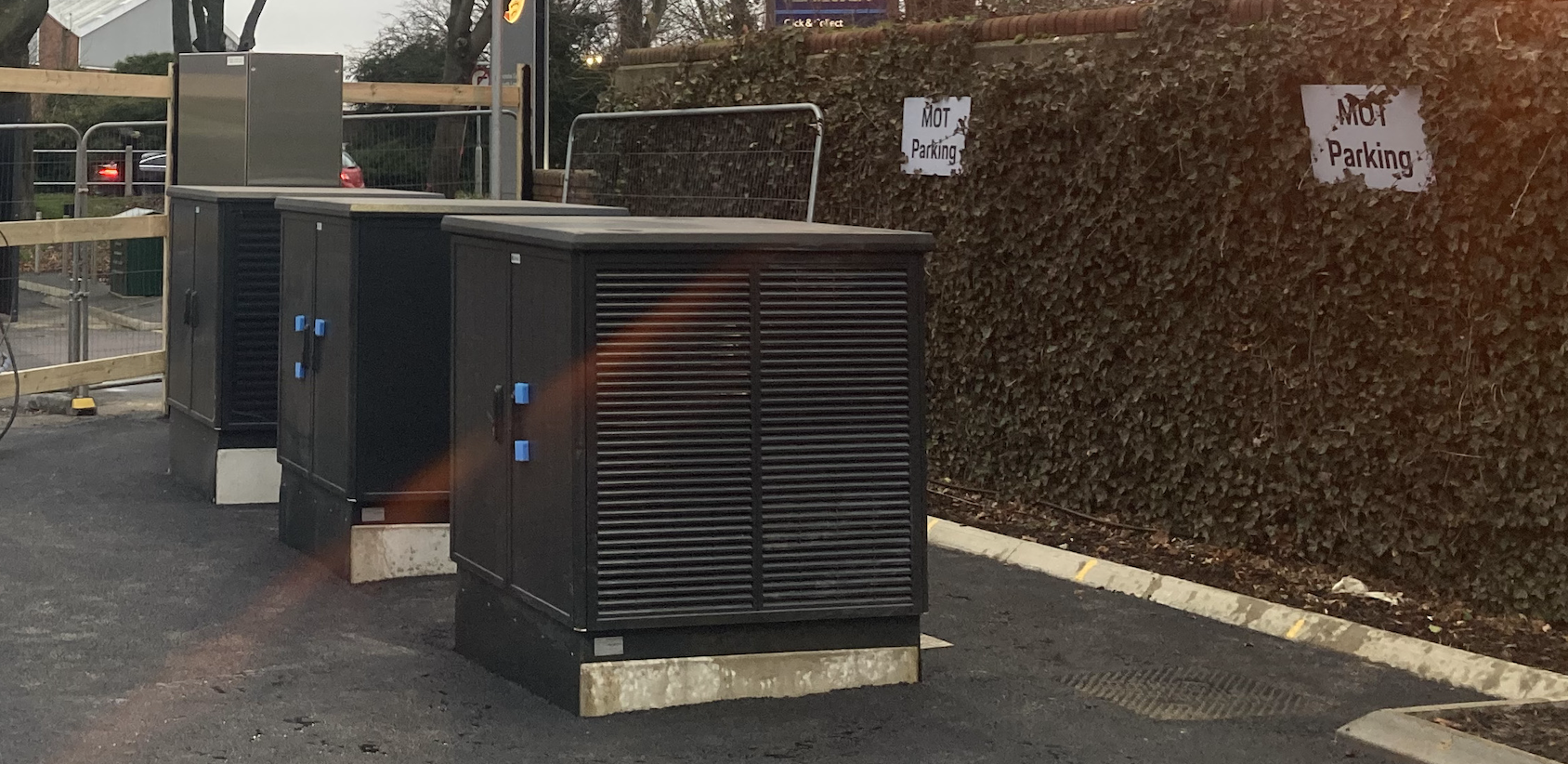
We began this project with excavating a 50m trench to connect ducting up to a substation, which provides the electric power needed to charge a car. Once the trench works were complete, our engineer marked out the area for the new kerbed island, and excavation bagan. The island was excavated, ducting’s installed, and the kerbs were laid, before excavating further for the charger cabinets and solar bases. These bases were shuttered ready for a concrete finish, with ducting’s popping up through to provide cover and protection for the electric cables.

After all the bases were installed and ducting’s connected, we backfilled all the surrounding areas to a finished level. Once the shelter was erected and installed on to the bolt boxes we concreted, we were able to finish off installing the charger bases and bollards provided to protect them from being hit by any vehicles. A short drain connection for the surface water was installed and we then finished off by stoning up all areas to a level and tidying up the site.

Value: £24,000
Duration: 3 Weeks

Porsche

By Recent EV Installs

Blackoak were approached to install several EV Chargers at a reputable, luxury car manufacturer in London.

Due to image and high profile nature of the client, it was more important than ever that we kept the site immaculate as we always aim to do on all sites.

We began with excavating a large area, big enough to accommodate the Isolation Transformer, Power Box, and Cooling Box, and then connected the network using a variety of ducts. All excavation works were preceded by scanning the area with a cable avoidance tool, and a banksman was present who was certified to use said CAT Scanner.

Once all the cables and infrastructure were in place and signed off, Blackoak were able to complete the project by reinstating the stone in layers and properly compacting, before finishing with a 2 layer surface to the car park.

Location: London
Value: £28,068

Euro Garages

By Recent EV Installs

Like all projects at Blackoak, we begin by making the work area safe for workers and members of the public. A thorough CAT Scan examination is completed to identify any services in areas of excavation.

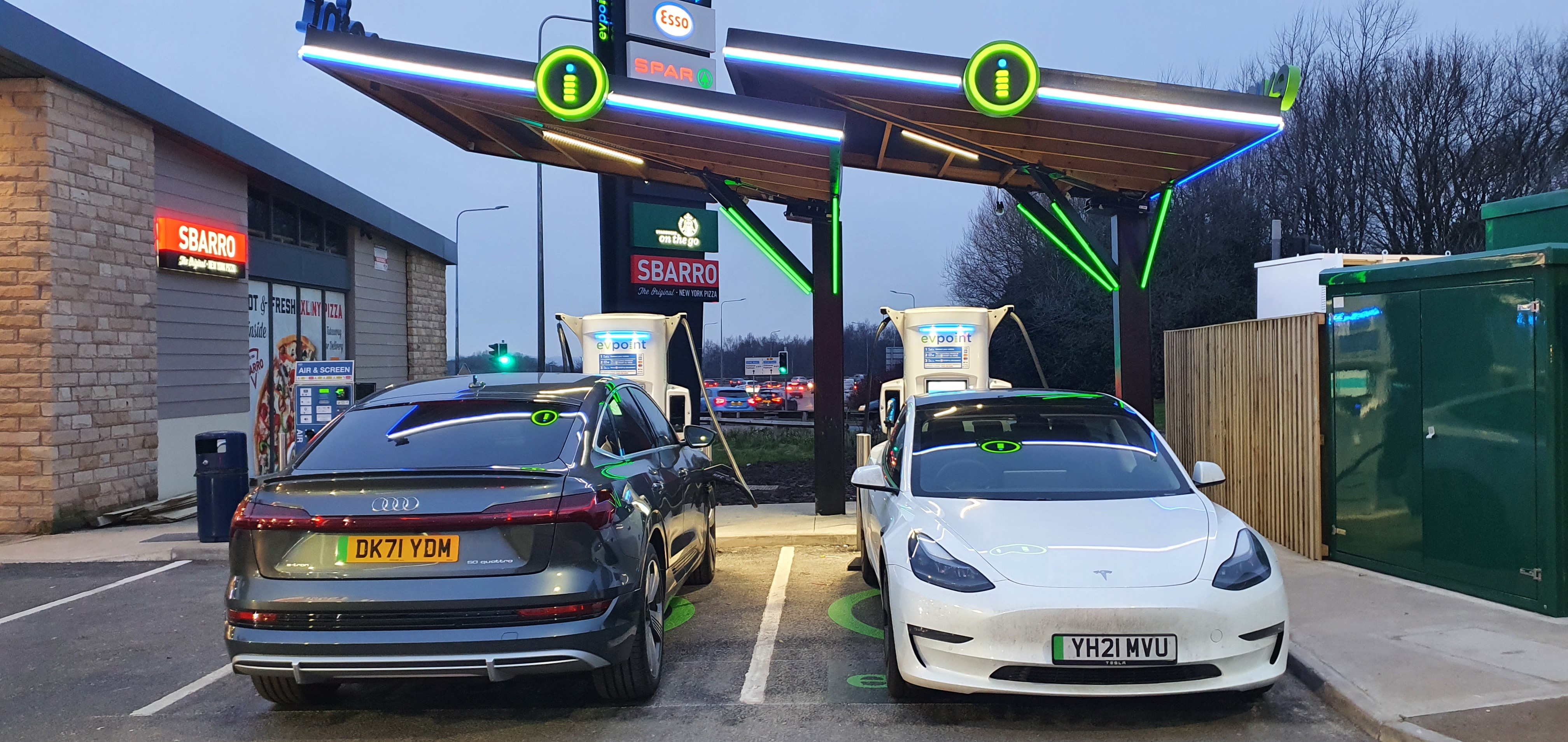
Once we finished excavating, we were ready to pour the concrete bolt box sections, installed for a large canopy over hanging the charger bays. This was then followed by the installation of all charger bases and the ducting which connects them to the substation, and includes a layer of sand and electric tape used to identify the hazards; installation of timber shuttering to pour the concrete into for the base to sit on.

A short drain connection for surfacing water was connected on to the canopy and we were then ready for reinstatement.

Finally, a short trench had to be excavated across the road entrance to make way for and to connect a light on a traffic island, with a SMA Bitumen finish. We had traffic management in place to protect our workers from traffic, and the works took place at night due to the lower volumes of traffic.

Machine Laid Tarmac

Car Park Extension for Wyre Forest District Council

By Recent EV Installs

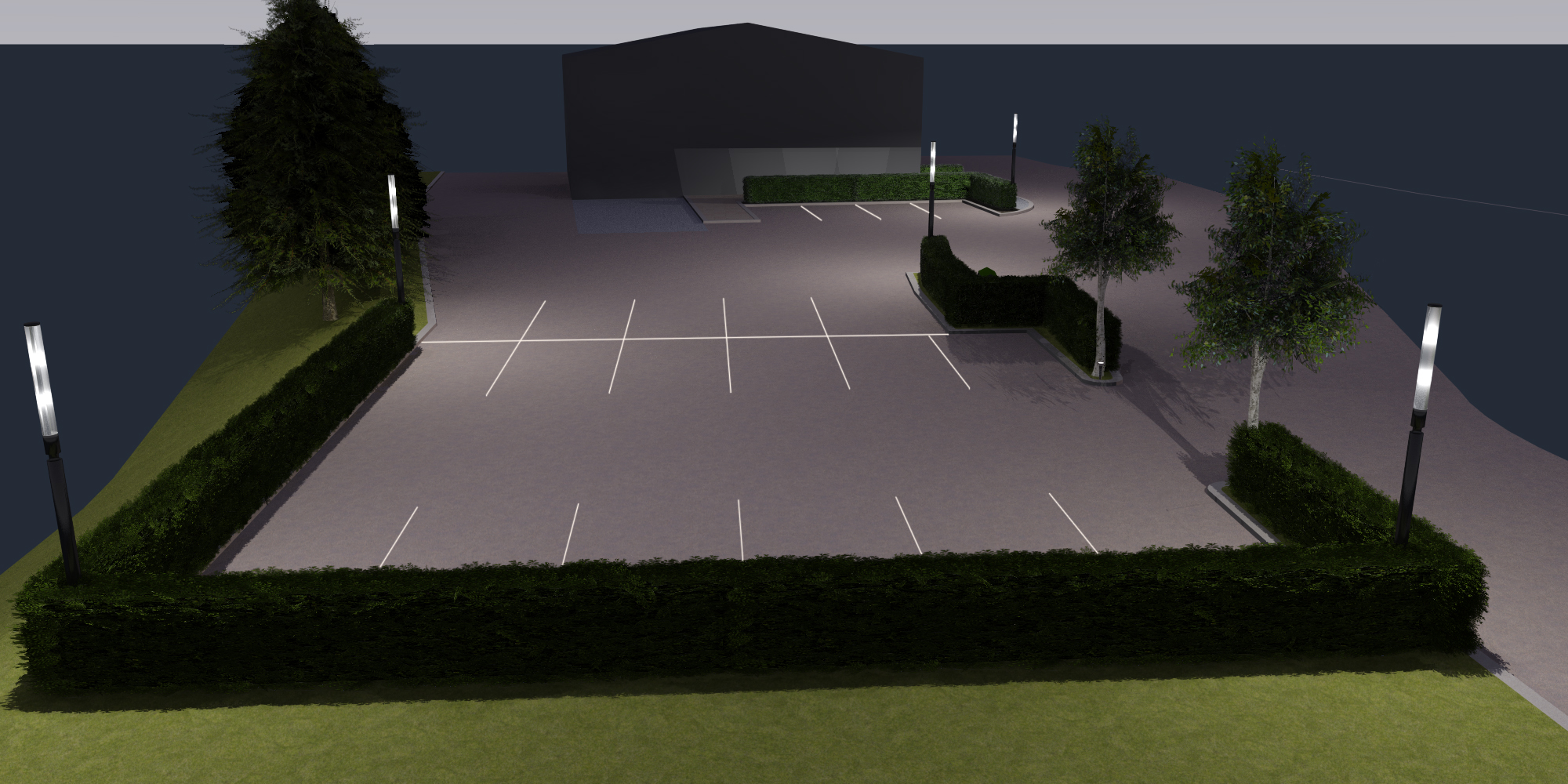
The contract was to extend Bewdley town centre car park by 23 car parking bays.

Method statements and risk assessments were provided to the client before works commenced.

Our first task was to create a safe site and to develop a plan so we could work safely without affecting or interfering with the general public. This required careful planning due to the high usage of the car park.

Excavation was the first job undertaken, using an 8-tonne digger. The site was excavated to a depth of 400mm and all spoil was removed from site almost immediately by grab vehicles to ensure space to work was always available on site. Trees were also excavated and removed promptly from the site.

Once the appropriate area was excavated and all spoil was removed from site we then laid a sub-base providing a clean solid surface to work from.

The next task was to lay half batter kerbs to form the shape of the car park. The kerbs were laid on 150mm beds of concrete and haunched at either side to create a solid structure. All kerbs were swilled with water and cleaned after installation.

Armco barriers were installed at one end of the carpark due to an embankment to prevent the public from going down the embankment.

Once all kerbing and barriers were installed and concrete was set, we then laid a second layer of MOT to create a more level surface. This was then compacted with a 120 sit on roller.

Heavy duty Aco drains were then placed in appropriate areas within the car park to deal with any surface water.

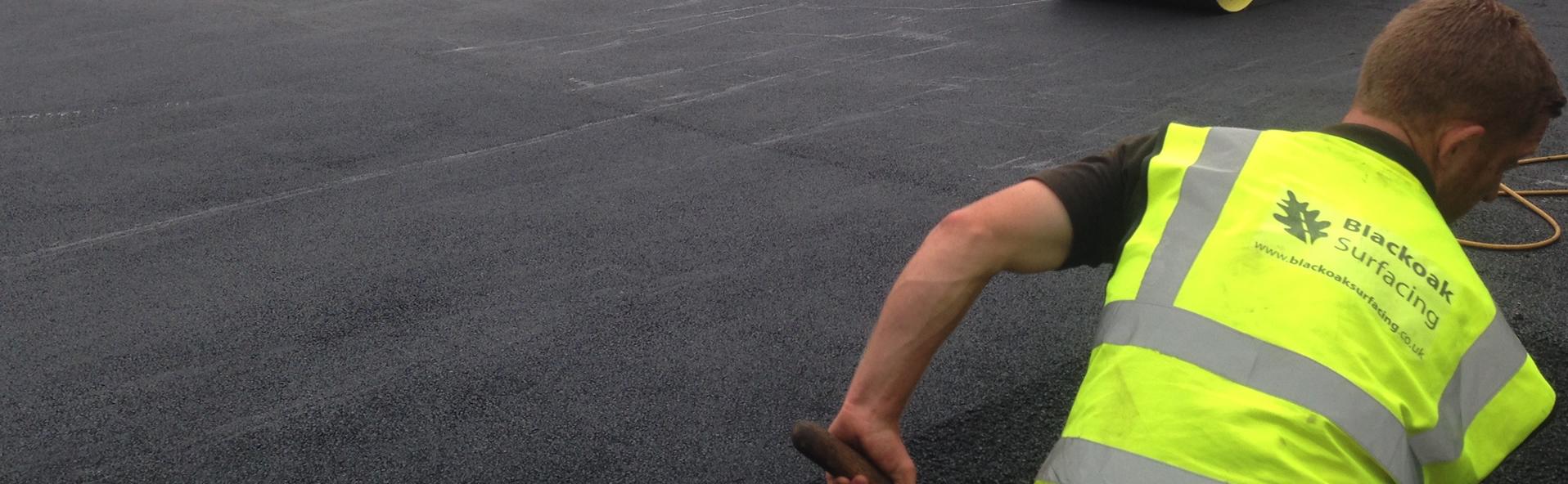
Next came the laying of asphalt. Firstly using a base course (AC32 dense) at an 80mm depth, and then a binder course (AC20 dense) at a 60mm depth and lastly applying a 40mm surface course (SMA AC10 dense). All layers were compacted individually.

The site was cleaned extensively and all site safety was removed to allow for the opening of the car park extension.

When work had finished on site we received positive feedback from residents of the town on how happy they were with the manner in which the work was carried out.

As a result of the work successfully undertaken on this project, we have been offered a larger contract from the same client.

Surfacing at Tameside Hospital

By Recent EV Installs

Blackoak Surfacing were contracted to do three separate projects for Tameside Hospital, which has led to other work at a number of hospitals around the UK.

The first project was to repair sunken gullies, which were placed in a bus stop within the hospital grounds.

This proved to be challenging due to the location of the site and the busyness of the hospital.

Regular communication with the client was required during the works to minimise interference to the hospital’s patients and staff.

Once arriving on site and meeting with the client to go through all safety procedures we sectioned the site off from the public with barriers and put up clear signs notifying the bus stop will be temporarily out of use and that an alternative bus stop had been arranged.

It was our duty to ensure all Blackoak Surfacing staff were polite and understanding towards the public and to provide a safe and friendly environment and service.

These works took one day to complete and included replacing four kerbs and two gullies, which were laid on a quick setting concrete mix so the bus stop could be in use soon after works had finished.

The second part of the works included grading of an existing surface on a deterring path.

Once the surface was graded and all waste was removed from site it was then our job to apply tack coat emulsion and AC6 surface asphalt layer. This was compacted with a vibe roller.

The third project was to resurface a flagged path.

We firstly removed all the flags from the site. This was done manually and flags were placed straight onto the back of a lorry.

We then chopped the grass at either side of the path to create a neat edge.

Edges were then formed with the use of wooden battens to retain the infill of the paths.

The paths were then levelled with stone and compacted with a compactor plate.

AC10 Asphalt surface course was then laid neatly to the paths and compacted with a vibe roller.

Each project created its own challenges, which were easily managed with good communication between Blackoak Surfacing and the client along with extensive planning.

Health and safety were our main priority during these works.

Machine Laid Asphalt Scarborough

Car Park Resurface for DFS

By Recent EV Installs

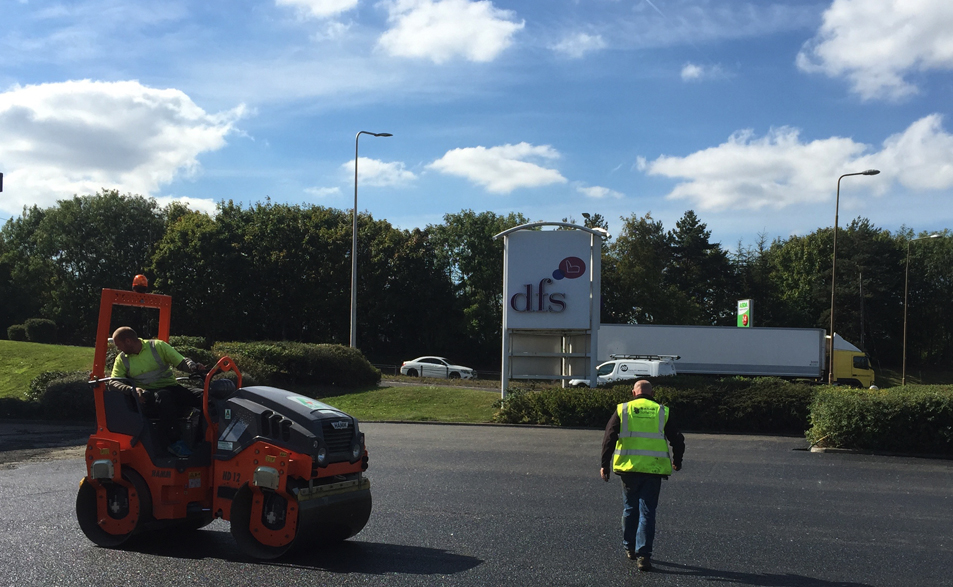
The job was to resurface a large car park and plan and construct a drainage system to solve the major flooding problem the car park was having, which prevented customers visiting the store.

Firstly we visited the site and performed an extensive site survey to determine the high and low points of the car park.

When this was completed we planned where the drainage would go and marked this clearly.

We then set up a safe working area. This was done in sections, as we had to keep parts of the car park open during works.

Trenches and holes were excavated to allow for pipe work and gullies to be installed. This was done six times and all drainage pipes ran back into existing drains. All waste collected from the excavations were relocated to an appropriate area on site before being collected from a grab lorry.

Once installed all gullies were checked to ensure they ran efficiently and effectively.

Sections were cut with a road saw at the entrance of the car park to allow the surface course to tie into the existing road surface.

A tack coat emulsion was then applied to the complete surface area of the car park by a machine.

A machine paver then laid asphalt. A total of 200 tonnes was laid and compacted with a 120 sit on roller. All edges and tight spots not accessible by the roller were compacted with a compactor plate.

Car parking bays and direction arrows were then painted on before the car park was reopened.

The car park no longer has any flood issues, which will give the new surface layer a longer life expectancy and not deter customers from visiting the store.