Electric Diggers: The Quiet Shift Happening on UK Sites
There is an irony at the heart of EV infrastructure. We build the groundworks for electric vehicles, and for years we have done it with diesel machines. That is starting to change.
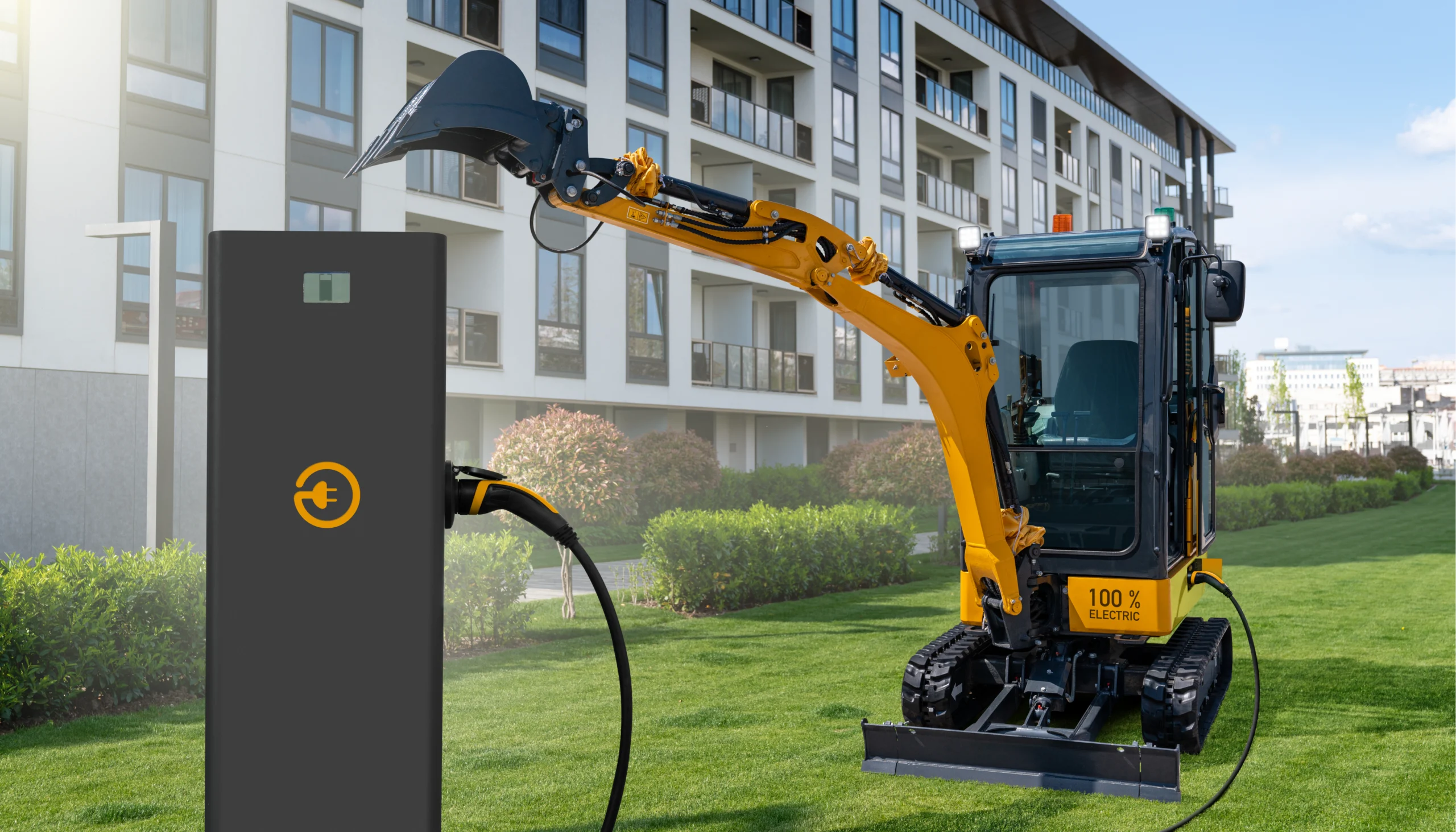
Electric diggers are no longer a concept stand at a trade show. They are working machines, on real sites, doing real groundworks. The technology has moved faster than most people outside the industry realise. For contractors working on EV charging infrastructure, that shift matters more than most.
Where the technology stands today
Compact machines lead the way. Mini excavators, small wheel loaders and compact track loaders electrify most easily, because their power demands suit current battery technology. Manufacturers have focused there first, and it shows. The choice available now is genuinely broad.
That focus makes sense. Compact plant does the bulk of the work on smaller civils packages, and it is exactly the kit that spends its life in tight, populated spaces. So the machines that electrified first are the machines that benefit most from being electric.
Adoption is climbing too. Analysts expect battery-electric compact equipment to pass ten per cent of the global market by 2030, with Western and Northern Europe running well ahead of that at roughly twenty-three per cent. Mini excavators specifically are forecast to reach around fifteen per cent.
What makes them work on site
The advantages are practical rather than theoretical.
Noise. An electric excavator is dramatically quieter than its diesel equivalent. On a live forecourt, a residential street or a 24-hour service station, that changes what is possible. Work can start earlier. Complaints drop. Restricted hours become less restrictive.
Air quality. No exhaust at the point of work. In enclosed spaces, near building entrances, or on sites where the public walk past all day, that is a genuine benefit rather than a talking point.
Operator experience. Less vibration, less noise, no fumes. Operators who have used them tend not to want to go back.
The regulation is heading one way
London already runs a Low Emission Zone for non-road mobile machinery. Since January 2025, plant on sites across Greater London has had to meet Stage IV as a minimum. From 2030, that tightens to Stage V. From 2040, only zero-emission machinery will be permitted at all.
Other authorities are following. Clean Air Zone cities increasingly attach similar conditions to planning consent on major schemes, and principal contractors often set their own standards above the legal minimum.
For anyone planning a fleet, the direction is unambiguous. The question is not whether electric plant becomes standard, but how soon.
The honest picture
It would be easy to overstate this. Industry commentators have rightly pointed out that the sector is still early in the transition, and that compact machines account for a relatively small share of overall fuel consumption. Charging on site takes planning. Upfront cost is higher.
None of that makes the shift wrong. It makes it a starting point rather than a finish line. Every fleet that adds a machine now learns something the spreadsheets cannot teach, and the bigger machines will follow.
Why this matters for EV civils
There is a logic to it that is hard to argue with. If the finished product is a charging hub, the groundworks that create it should reflect the same thinking. Clients increasingly notice. Tender questions on carbon and emissions are becoming routine rather than exceptional.
At Blackoak Contracts, we deliver the full civils scope on EV projects excavation, trenching, ducting, concrete bases, drainage and reinstatement. Investing in electric plant is a natural extension of that work rather than a departure from it.
So here is the question
At what point does electric plant stop being a differentiator and start being an expectation?
Our view is that it is closer than most people think. Regulation is tightening, availability is improving, and clients are asking better questions.
We would be interested to hear from others in the sector. Are you seeing electric plant specified in tenders yet? And if not, how long do you think that lasts?
Recent Posts