Category

Industry News

Cat-scanner-site-safety-blackoak-surfacing

What is a HSG47 in the Health and Safety

By Industry News

The HSG47

(Avoiding danger from underground services)
The HSG47 refers to Article 47 of the Health and Safety Guidance Act. It outlines the dangers, which can arise from working near underground services and gives advice on how to reduce the risk.

Where the HSG47 guidance applies:

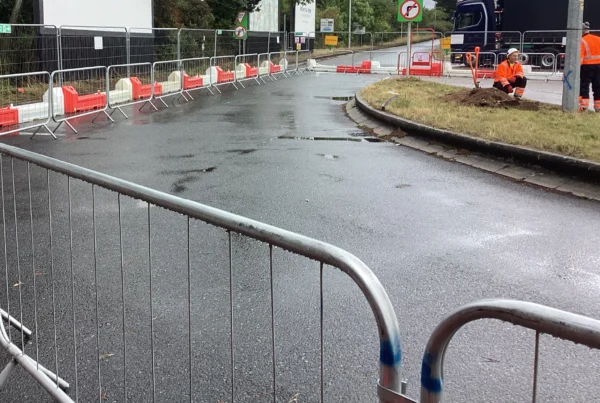
• This guidance applies to situations where underground services may be found and where work involves penetrating the ground at or below surface level.
• For road resurfacing, where ground penetration is contained within the wearing and base courses, the services encountered are likely to be limited to traffic sensor cables. Care will still need to be taken, in particular, to avoid damage to surface boxes for valves, pressure points, test points etc.
• All other work will be covered by this guidance including work in footways and kerbing, regardless of depth, as underground services may be found near the surface.
The dangers of underground services

Damage to underground services can cause fatal or severe injury. The main dangers and their effects under HSG47 are:
Electricity cables (Fire risk, explosion, electrocution, unrepaired live wires)
Gas pipes (Fire risk, explosion, leakage)
Water/sewage pipes (Pollution of water, flooding, mixing with gas pipes)
Telecommunications (Disruption of services, expensive repairs)

How to avoid the dangers of underground services when conducting work

A safe system of work has four basic elements:

1. Planning the work;
2. Plans for the work;
3. Cable and pipe locating devices; and
4. Safe digging practices.

Planning

This is where the designs for the planned work is conducted, where work is planned in advance to avoid certain services and where any required permissions and permits can be identified and acquired. This is when The CDM (Construction Design Management) is conducted so that management of the dangers can be assessed and built into the construction plans.
Plans

This is where plans for the design process are produced. These plans show the exact details of the required project, showing the location of work and location of underground services and how measures will be taken to work on these services and the health and safety measures taken to prevent injury.

Cable and pipe locating devices

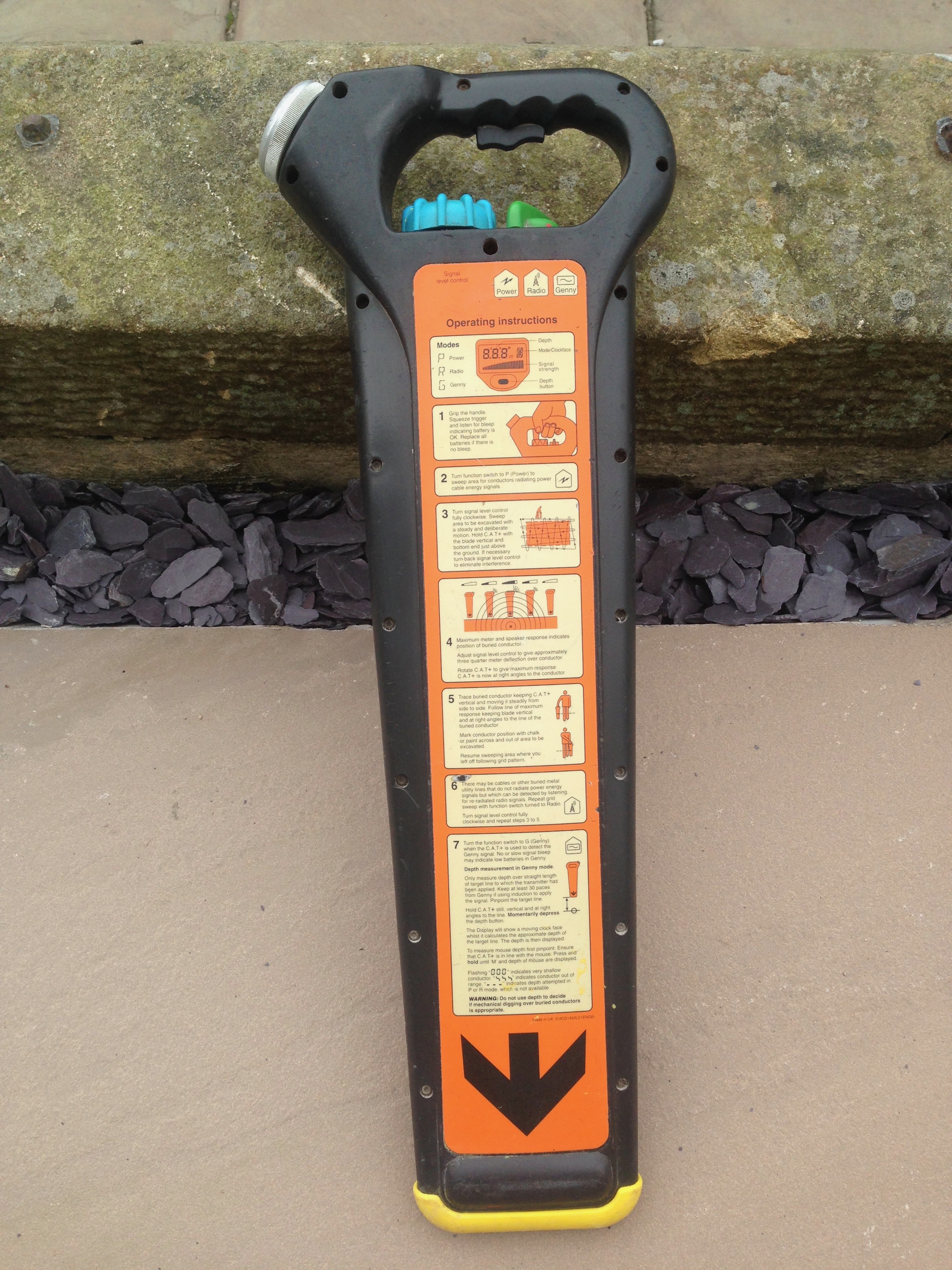
This process involves using detecting instruments to detect pipelines or cables to exact measurements to ensure the location of the pipeline/cable matches with the plans of the project to ensure construction/digging practices can be undertaken safely and accurately.

Safe digging

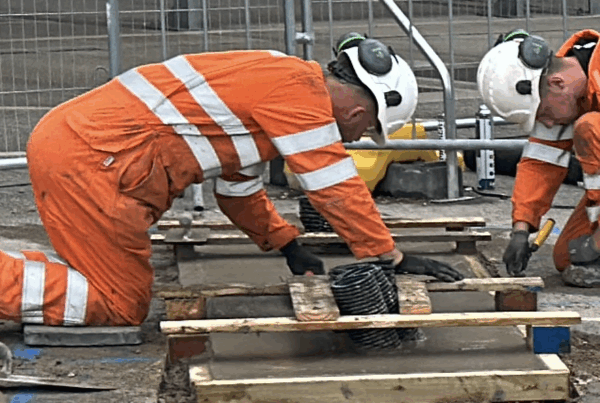
This is where the digging/construction process is carried out using safe and protective means of construction. This involves indicating and marking where pipelines/cables are located in the ground; avoiding damage to services, prohibit the use of power tools near services and the proper reburial of all exposed services after the project.

 

Recent Posts

The UK\’s Charging Gap: Are We on Track for 2030?

| Industry News | No Comments
The UK's Charging Gap: Are We on Track for 2030? The UK is on target with its goal to transition to EVs but the question remains: is the infrastructure keeping…

Bridging the Gap: The Rollout of EV Charging Infrastructure in Rural UK

| Industry News | No Comments
Bridging the Gap: The Rollout of EV Charging Infrastructure in Rural UK The UK's EV charging network is expanding fast, but is it expanding evenly? As of January 2026, just…

The LEVI Fund Explained – What It Means for EV

| Industry News | No Comments
Infrastructure Contractors If you work in EV infrastructure, you've probably heard the LEVI fund mentioned. But what exactly is it, who does it affect, and more importantly what does it…
A british-standard-kerb-blackoak-surfacing

A Kerb Kerbstones and haunching

By Industry News

You may think a kerb as part of surfacing a car park or road surface is boring, well think again! They are an essential component of the everyday tasks of surfacing. They come in all shapes and sizes with each one providing a different message to the everyday person.

What is the point of a kerb?

Well, the answer to this is simple.

Kerbs…

  • Mark the end of a pavement to a road – essential for pedestrian safety.
  • Provide a corridor for vehicles to be directed by.
  • Create an edge to work with.
  • Help channel water towards the drainage.

Types of common kerbs

They are many types, but the two most common are the radius and half battered kerbs. All types need to be a British Standard product.

(These are only a selection. For more information on kerbs please contact Blackoak Surfacing)

Ok, but how is a kerbstone installed?

Concrete is laid on the ground, underneath where the kerbstone will be installed. This concrete provides the kerbstone with a strong structure and foundation. This process is called bedding. Once the bed is installed it is then finished. It is important that each is aligned to the closest measurement to ensure a quality and ascetically pleasing finish. A small gap should be left from the baseline and kerbstone to allow for drainage. This is given the deserving name of the drainage line.

The next process is called haunching. Don’t let the fancy name fool you it’s quite simple! Bedding makes sure that the base is strong and won’t submerse underneath the ground, however, haunching provides structural support by holding the kerbstone in place so it can’t move out of alignment, ensuring a professional finish. The haunching is also placed on the bed of concrete ensuring a solid fix.

What are the measurements?

Measurements can vary, however, these are the ‘British Standard’ measurements for the half battered and radius kerbs.


Type of kerb

Height

(from bedding)

WidthLength
Half battered kerb225mm125mm915mm
Radius kerb225mm125mm780mm


Recent Posts

The UK\’s Charging Gap: Are We on Track for 2030?

| Industry News | No Comments
The UK's Charging Gap: Are We on Track for 2030? The UK is on target with its goal to transition to EVs but the question remains: is the infrastructure keeping…

Bridging the Gap: The Rollout of EV Charging Infrastructure in Rural UK

| Industry News | No Comments
Bridging the Gap: The Rollout of EV Charging Infrastructure in Rural UK The UK's EV charging network is expanding fast, but is it expanding evenly? As of January 2026, just…

The LEVI Fund Explained – What It Means for EV

| Industry News | No Comments
Infrastructure Contractors If you work in EV infrastructure, you've probably heard the LEVI fund mentioned. But what exactly is it, who does it affect, and more importantly what does it…